Strengthening Africa’s Validation and Verification Capacity: A Strategic Imperative to Unlock the Continent’s Carbon Market Potential
Global demand for carbon credits is rising rapidly. For Africa, this represents a transformative opportunity: to reduce greenhouse gas emissions, mobilize climate finance, and generate sustainable socio-economic benefits.
However, a critical structural constraint remains — the limited capacity of Africa-based Validation and Verification Bodies (VVBs).
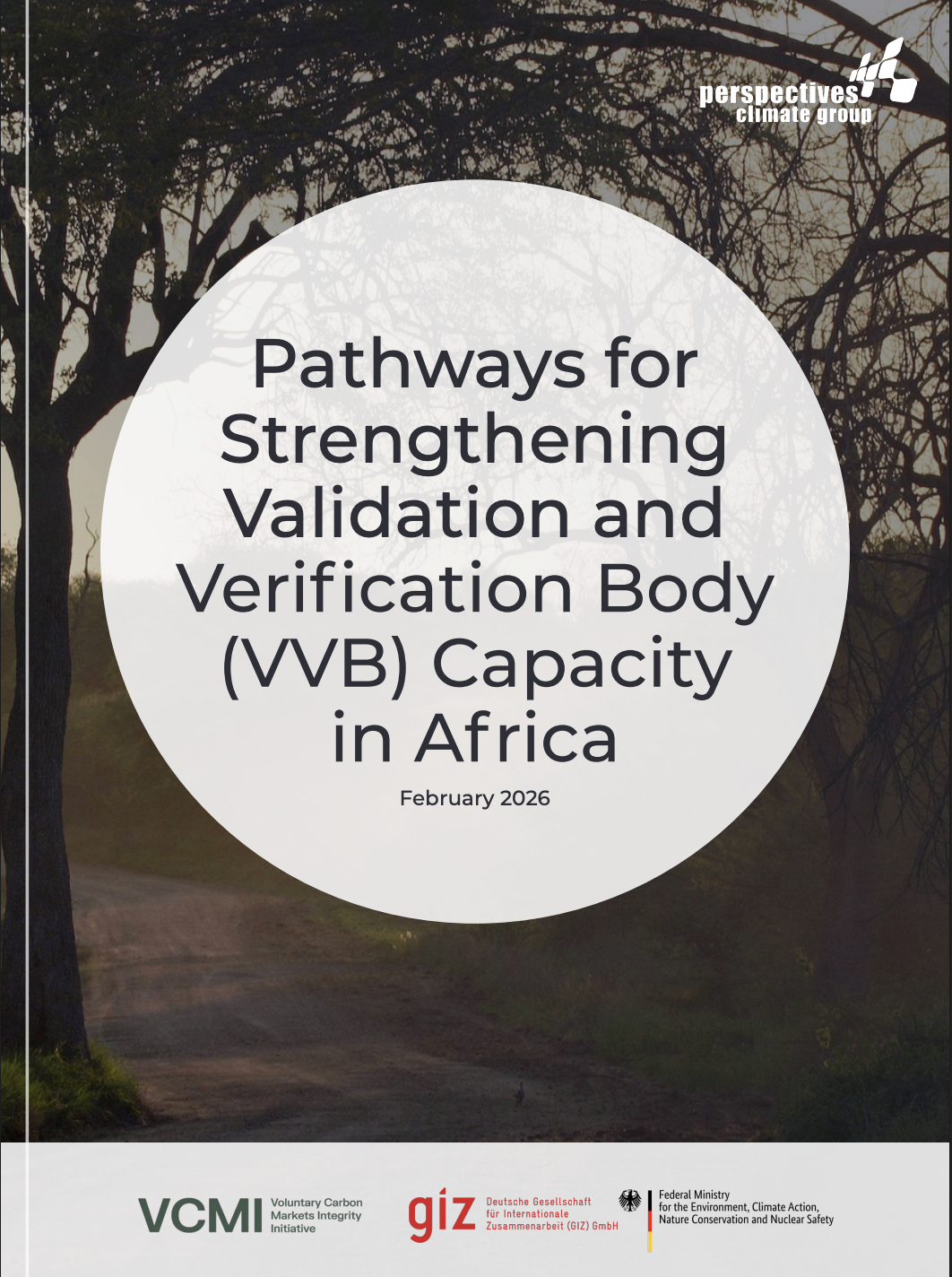
In response to this challenge, and in partnership with Deutsche Gesellschaft für Internationale Zusammenarbeit GmbH (GIZ) and Perspectives Climate Group, a new strategic guide has been developed:
Pathways for Strengthening Validation and Verification Body (VVB) Capacity in Africa.
The Alliance is proud to have contributed to the development of this report, which provides a practical roadmap to strengthen Africa’s carbon market infrastructure.
A Critical Bottleneck in Africa’s Carbon Market Growth
The report highlights several key findings:
Africa still relies on international providers for over 90% of carbon project verification activities.
Between 10% and 50% of project delays and cost overruns are linked to VVB bottlenecks.
In 2024, the continent issued 12.2 million carbon credits, yet tapped only 2% of its estimated maximum potential.
This gap between potential and delivery underscores the urgency of building strong, credible, Africa-based VVB capacity aligned with international standards.
Why Validation and Verification Bodies Matter
Validation and Verification Bodies play a central role in ensuring environmental integrity in carbon markets.
They are responsible for:
Validating project design and methodologies,
Verifying emission reductions,
Ensuring the credibility of issued carbon credits.
Without robust local capacity, African projects remain dependent on external providers, leading to higher costs, longer timelines, and lost economic value for the continent.
Nine Priority Actions to Scale Capacity
The report outlines nine strategic priority actions to address the VVB shortage, including:
✔️ Providing clear policy signals on the role of carbon markets in Nationally Determined Contribution (NDC) implementation
✔️ Scaling national and regional accreditation systems aligned with ISO standards
✔️ Deploying targeted financial de-risking instruments
✔️ Integrating digital MRV (Monitoring, Reporting, and Verification) tools
These measures require coordinated action among governments, regional institutions, development partners, and private sector actors.
A Major Economic Opportunity for Africa
Strengthening Africa-based VVB capacity is not merely a technical reform — it is a strategic economic opportunity.
It would:
Support the creation of green, skilled jobs,
Build local technical expertise,
Retain the full value of high-integrity carbon markets within the continent.
The opportunity cost of inaction is significant. Without coordinated efforts to scale Africa-based VVB capacity, the continent risks losing approximately USD 1 billion in economic benefits over five years.
The Alliance’s Strategic Contribution
This report was produced under the VCMI Access Strategies Program, which supports countries to meaningfully participate in and benefit from the global carbon market.
It is also supported by the Eastern Africa Alliance on Carbon Markets and Climate Finance and the West African Alliance.
By contributing to this initiative, the Alliance reaffirms its commitment to:
Strengthening African institutional capacity,
Promoting high-integrity carbon markets,
Advancing a just and economically beneficial climate transition for the continent.
Read the Full Report
We invite policymakers, project developers, investors, and partners to explore the full report and engage with the roadmap it sets out.
The time to unlock Africa’s carbon market potential — with integrity, capacity, and ownership — is now.